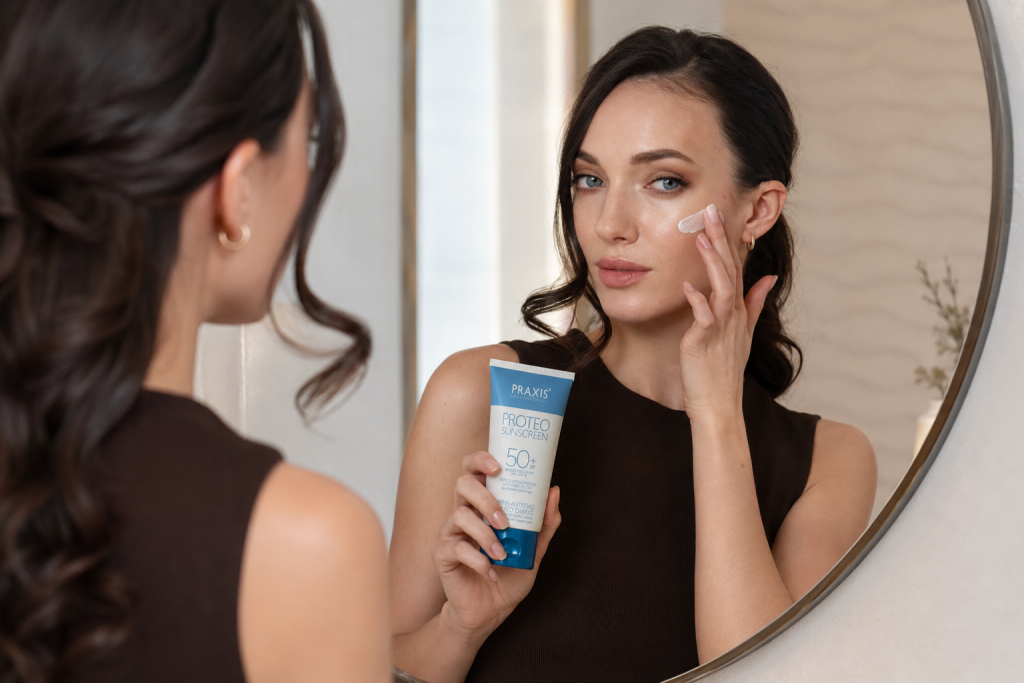
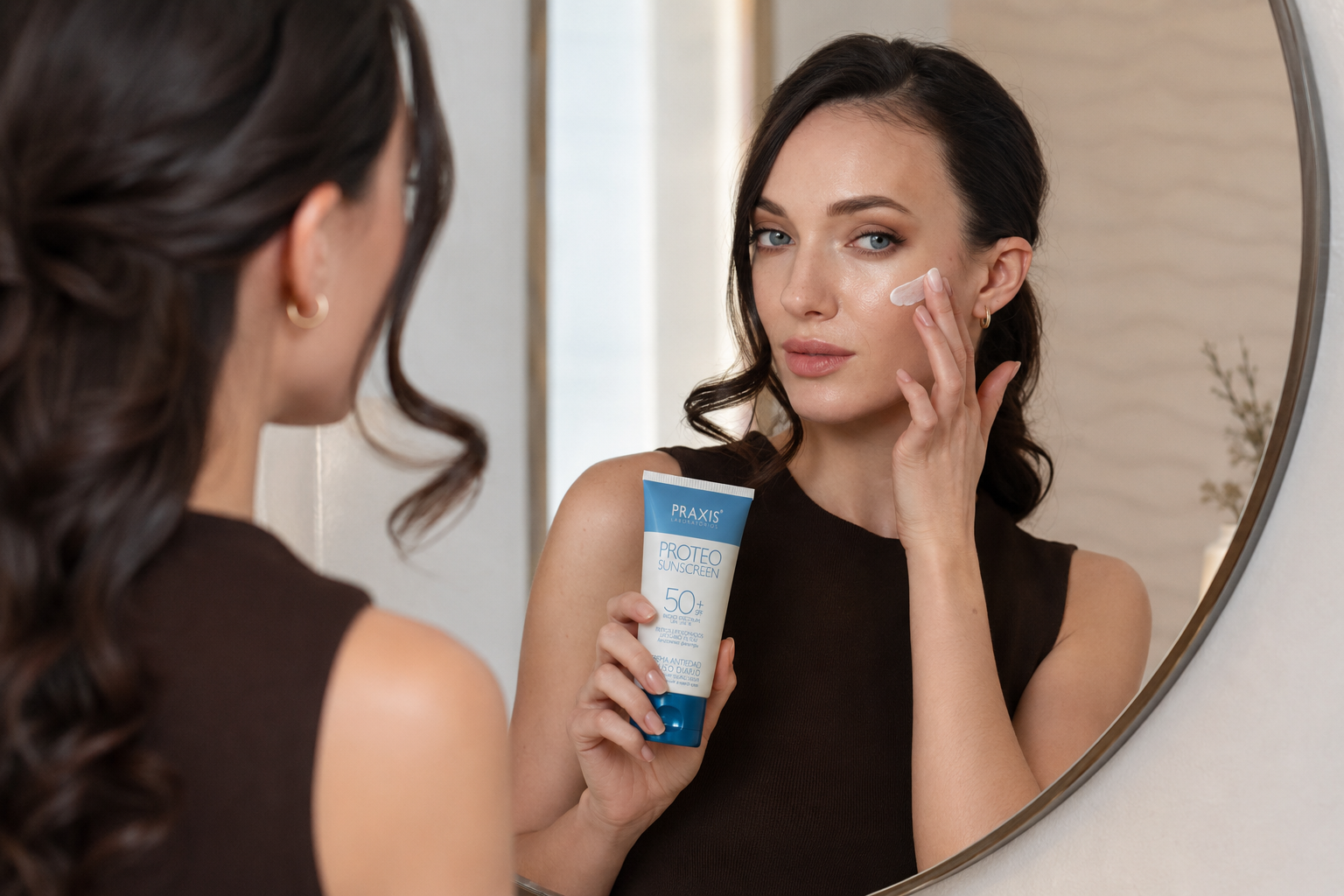
Your Daily Sunscreen SPF 50+ Defense
The UV Threat: Why Sunscreen Matters Every Day
The sun emits two types of harmful ultraviolet radiation that reach the Earth’s surface: UVA and UVB rays. UVA rays penetrate deep into the dermis, causing premature aging, wrinkles, and loss of elasticity — a process known as photoaging. UVB rays affect the skin’s surface and are primarily responsible for sunburn and the development of skin cancer.
Both types of radiation damage the DNA of skin cells, leading to mutations that can accumulate over time. According to the Skin Cancer Foundation, one in five Americans will develop skin cancer by age 70, and the majority of cases are directly linked to unprotected UV exposure.
The good news? Using daily sunscreen with broad-spectrum SPF 50+ can dramatically reduce these risks. Dermatologists recommend applying daily sunscreen every day of the year — rain or shine, winter or summer — because UV rays penetrate clouds and windows.
4 Key Benefits of Daily Sunscreen
Prevents Premature Aging (Photoaging)
The sun is the main culprit behind premature aging. UVA and UVB rays damage collagen and elastin fibers, leading to sagging, wrinkles, and fine lines. Daily sunscreen acts as an invisible barrier, preventing these rays from destroying the skin’s internal structures. Numerous dermatological studies confirm that people who apply daily sunscreen show significantly fewer signs of aging, maintain an even skin tone, and avoid redness and blemishes.
Prevents Hyperpigmentation & Uneven Tone
Sun exposure without protection triggers melanin production, resulting in dark spots, melasma, and uneven skin tone. When UV exposure is prolonged or frequent, melanin accumulates unevenly, causing permanent discoloration. Daily sunscreen prevents this hyperpigmentation by blocking the UV rays that stimulate melanin production, helping maintain a clear, even complexion.
Keeps Skin Healthy & Hydrated
Modern sunscreens, such as Proteo Sunscreen SPF 50+, contain moisturizing ingredients like hyaluronic acid and aloe vera, alongside antioxidants such as Vitamin C and Vitamin E. These ingredients not only protect but also hydrate, soothe, and strengthen the skin barrier. Liposomal sun filters provide even, long-lasting coverage while nourishing the skin.
Reduces the Risk of Skin Cancer
UV radiation is a leading cause of skin cancer, including melanoma, the most aggressive and deadly form. Applying a broad-spectrum SPF 50+ sunscreen daily significantly reduces this risk. The American Academy of Dermatology recommends using SPF 30 or higher for adequate protection, with SPF 50+ offering the highest level of defense against both UVA and UVB rays.
Sunscreen vs. No Sunscreen: The Evidence
Clinical studies consistently demonstrate the protective power of daily sunscreen. The table below summarizes key findings from dermatological research.
| Outcome | With Daily Sunscreen | Without Sunscreen |
|---|---|---|
| Premature Aging Signs | ✔ 24% fewer signs | ✘ Accelerated photoaging |
| Skin Cancer Risk | ✔ 50% lower risk | ✘ Significantly increased |
| Hyperpigmentation | ✔ Prevented | ✘ Dark spots, melasma |
| Skin Hydration | ✔ Maintained | ✘ Dehydrated, compromised barrier |
| Collagen Integrity | ✔ Preserved | ✘ Degraded by UVA |
| Even Skin Tone | ✔ Maintained | ✘ Uneven, blotchy |
Am I Applying Sunscreen Correctly?
Do you regularly use daily sunscreen? Now you should ask yourself: Are you applying it correctly? Here we explain how and when to use it so that it really works and provides maximum protection for your skin.
Choose the Right SPF
Select a broad-spectrum sunscreen (UVA and UVB protection) with SPF 50+ for maximum defense. Look for formulas suitable for your skin type — oil-free for oily skin, hydrating for dry skin, or sensitive skin formulas.
Apply the Two-Finger Rule
Most people use less sunscreen than necessary. The two-finger rule: apply two lines of product to your index and middle fingers and spread over your face and neck. This equals about half a teaspoon — enough for even protection.
Reapply Every 2-3 Hours
During the day, sunscreen loses effectiveness due to sweat, water, or friction. To maintain protection, reapply every 2-3 hours, especially after swimming, sweating, or towel drying.
Choosing a Suitable Sunscreen
In the cosmetics market, we’re finding more and more sunscreen options that are easy and convenient to use and offer broad-spectrum sun protection. Those thick creams that left a white cast are a thing of the past. However, with so many options, it can sometimes be difficult to know which one is right for you.
It’s best to look for a sunscreen suitable for your skin type that offers broad-spectrum protection (UVA and UVB). Modern formulations like Proteo Sunscreen SPF 50+ combine:
- Hyaluronic Acid — intense hydration
- Aloe Vera — soothing and calming
- Vitamin C — antioxidant protection
- Vitamin E — free radical defense
- Liposomal Filters — even, long-lasting coverage
- SPF 50+ — highest UVA/UVB protection
The Two-Finger Rule: How Much Sunscreen to Apply
One of the most common mistakes in sunscreen application is using too little product. Studies show that most people apply only 25-50% of the recommended amount, significantly reducing protection.
The two-finger rule is a simple, practical guideline: squeeze two lines of sunscreen along the length of your index and middle fingers. This volume — approximately half a teaspoon — is the correct amount for your face and neck. Don’t forget to extend application to your ears, a highly vulnerable area that is often overlooked.
Reapply Sunscreen for Effective Protection
Even the best daily sunscreen loses effectiveness over time. Sweat, water, friction from clothing and towels, and natural oil production all contribute to the gradual removal of sunscreen from the skin’s surface.
To maintain continuous protection throughout the day, it is essential to reapply every 2-3 hours. If you are swimming, exercising, or spending extended time outdoors, reapply more frequently — ideally after towel drying. For makeup wearers, consider powder or spray sunscreens that can be applied over makeup without disturbing it.
The Daily Sunscreen Checklist
✔ Broad-spectrum SPF 50+ · ✔ Apply two finger-lengths · ✔ Reapply every 2-3 hours
Proteo Sunscreen SPF 50+ combines hyaluronic acid, aloe vera, vitamins C & E, and liposomal filters for comprehensive daily protection.
SPF 50+ broad-spectrum · hydrating · antioxidant-rich
Conclusion: Make Daily Sunscreen a Habit
The evidence is clear: daily sunscreen is the single most effective step you can take to protect your skin from premature aging, hyperpigmentation, and skin cancer. Despite its simplicity, many people still underestimate its importance or fail to apply it correctly.
By choosing a broad-spectrum SPF 50+ sunscreen, applying the correct amount using the two-finger rule, and reapplying every 2-3 hours, you can significantly reduce your UV exposure and keep your skin healthy, youthful, and radiant for years to come.
Sunscreen isn’t just for the beach or sunny days. Dermatologists recommend applying it daily as part of your morning routine — rain or shine, winter or summer. Your future self will thank you.
References & Further Reading
- American Academy of Dermatology. (2024). Sunscreen FAQs. AAD.org
- Skin Cancer Foundation. (2024). Skin Cancer Facts & Statistics. SkinCancer.org
- Green, A. C., et al. (2011). Daily sunscreen application and photoaging: A randomized controlled trial. Annals of Internal Medicine, 155(4), 219-226. PubMed
- Hughes, M. C., et al. (2013). Sunscreen and prevention of skin aging: A randomized trial. Annals of Internal Medicine