
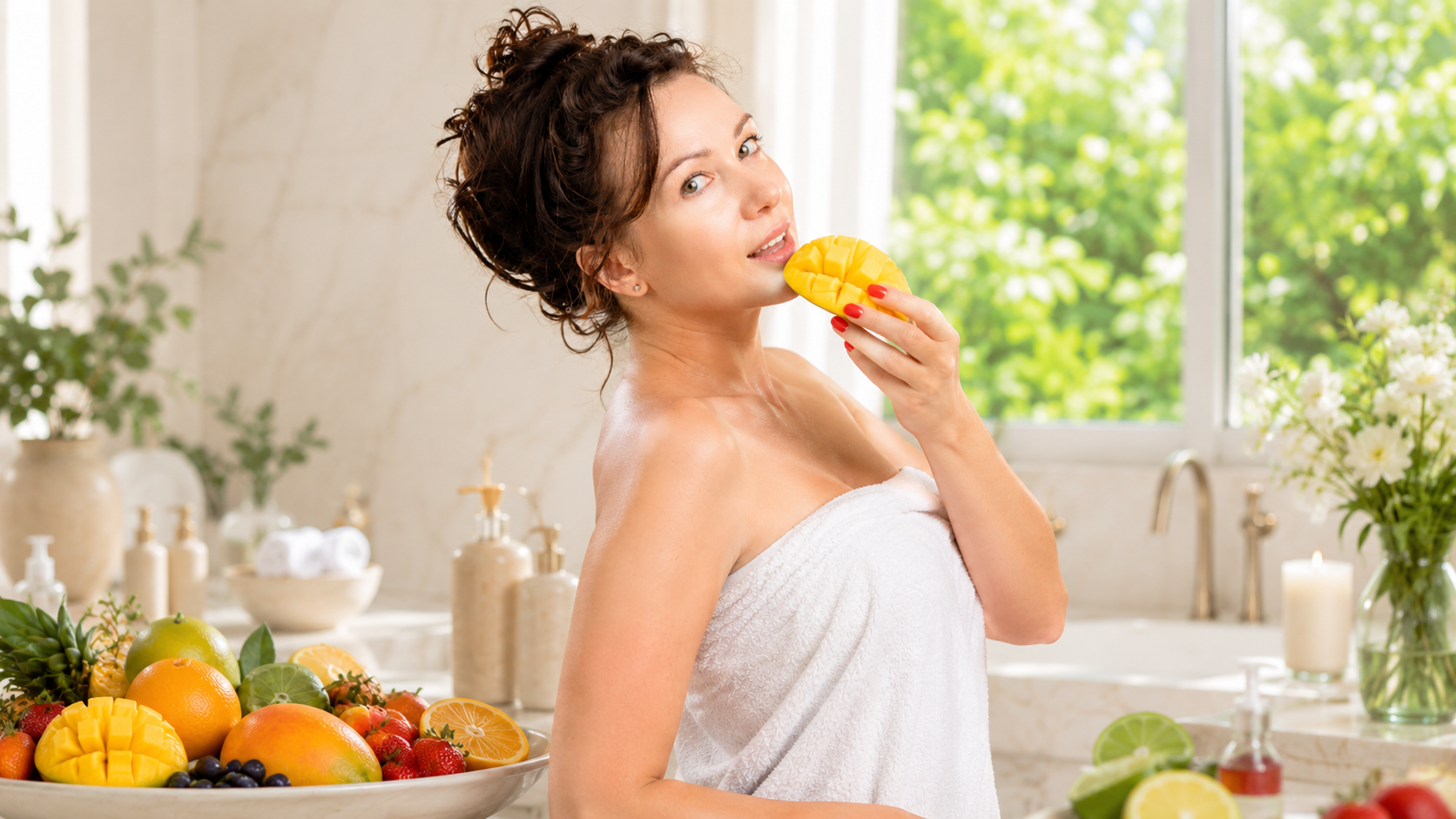
A Glow You Can’t Wash Off: What is Your Skin Truly Missing?
Did you know that even the most luxurious skincare products only affect the very surface of your skin? A true, deep glow and that highly desired “plump skin” look are actually born in the dermis—a layer no cream can reach. When we rush through our daily routines and face constant stress, our skin is often the first to experience internal starvation. The science of nutridermatology reveals that a simple, conscious step—a carefully selected fruit basket—can awaken the deepest moisture reserves of the skin and protect collagen in a way that no topical product ever could. Stop for a moment and discover what your face is truly missing.
The Inner Architecture of the Skin
Our skin is a living, constantly reacting ecosystem. When we touch our own or a client’s face, we are touching a complex architectural network known as the extracellular matrix (ECM). The main pillars of this structure are collagen, which we all know so well, and proteoglycans.
Proteoglycans act as the silent guardians of water in the dermis. They create a hydrophilic gel capable of attracting and retaining moisture, which gives the skin its soft, natural plumpness and turgor. Over time, under the influence of environmental stress and UV rays, these reserves gradually deplete. This raises a fundamental question: how can we help the skin restore itself in the most natural way possible, simply by enriching our daily diet?
What the Science Says: Peace and Regeneration in the Light of Clinical Data
When looking at randomized controlled trials (RCTs), the picture becomes remarkably clear and reassuring:
- Gentle TEWL Reduction: Clinical studies (such as the extensive systematic review by Wang et al.) confirm that the regular intake of targeted fruits and their bioactive extracts noticeably increases stratum corneum hydration and reduces transepidermal water loss (TEWL). The skin literally learns to retain moisture better within the dermis.
- Protection Against Environmental Stress: We know that UV rays cause micro-inflammation and activate matrix metalloproteinases (MMPs)—the enemy enzymes that literally chop up our collagen fibers. The polyphenols found in fruits act as a natural, gentle shield that calms these processes, allowing fibroblasts to peacefully synthesize new type I procollagen.
Nature’s Gift to the Skin: Everyday Discoveries
Certain fruits act as targeted therapies for different skin conditions:
Mangoes: Gentle Wrinkle Depth Reduction
The xanthone glycoside found in mangoes—mangiferina—acts as a natural collagenase inhibitor. Studies show that regularly including this fruit in the diet helps maintain elasticity in the dermis and noticeably softens deep wrinkles.
Berries: Calming the Skin After Sun Exposure
Blueberries, blackberries, and strawberries are incredibly rich in ellagic acid and anthocyanins. This is excellent support for the skin after the summer season or a beach vacation—berry antioxidants act in the dermis like a cool, soothing compress that halts photoaging.
Bananas: Cellular Hydration Balance
When the skin lacks vitality and looks superficially dry, it is worth remembering bananas. The potassium they contain perfectly regulates osmotic pressure in the cells, while amino acids strengthen the natural moisturizing factor (NMF), complementing the work of deep proteoglycans.
Papayas: Brightening and Gentle Regeneration
The enzyme papain found in papayas, combined with lycopene, gently stimulates keratinocyte differentiation. This helps the skin regenerate faster, yet completely naturally, restoring a healthy epidermal barrier and reducing TEWL without causing any irritation.
Apples: Preserving Collagen Flexibility
Glycation—the process where sugar hardens collagen fibers—makes the skin rigid and non-elastic. The polyphenol phloridzin found in apples helps protect skin structures from this process, keeping the collagen network flexible and pliable.
Grapes: Restoring Deep Structures
Resveratrol in grapes awakens longevity genes (SIRT1) within skin cells. They signal fibroblasts to produce more natural hyaluronic acid, making the skin look denser and firmer over time.
Watermelons: Instant Hydration Boost
The amino acid L-citrulline in watermelons helps improve microcirculation in skin capillaries. When tissues are better supplied with blood, fibroblasts absorb nutrients more easily, while the massive amount of structured water deeply hydrates the skin matrix.
Oranges and Citrus Fruits: The Structural Foundation
Vitamin C is the essential base without which the collagen helix simply cannot twist correctly. Combined with hesperidin, these citrus elements strengthen small capillaries, providing wonderful support for sensitive skin prone to redness.
Guidelines for Consultation: The Fruit Effects Map
To make it easier to choose calm yet effective advice for clients during consultations, everything has been arranged into this simple guide:
| Fruit | When to Recommend It? (Indication) | Biochemical Effect in the Skin | Visible Result |
|---|---|---|---|
| Mangoes | Reduced skin tone, wrinkles. | Protects collagen and elastin fibers. | Softer, smoother wrinkles. |
| Berries | Photoaging, irritated skin. | Inhibits UV-induced micro-inflammation. | Calmed, revitalized skin. |
| Bananas | Superficial dryness, flaking. | Supports NMF and cell fluid balance. | Soft, supple skin. |
| Papayas | Dull, slowly regenerating skin. | Promotes natural skin renewal. | Healthy epidermal glow. |
| Apples | Loss of skin elasticity. | Halts collagen hardening (glycation). | Flexible collagen framework. |
| Grapes | Thin skin, loss of volume. | Stimulates hyaluronic acid production. | Improved skin turgor and density. |
| Watermelons | Dehydration, poor microcirculation. | Improves capillary blood flow and hydrates. | Plump, refreshed skin. |
| Oranges / Citrus | Couperose, lack of firmness. | Activates collagenogenesis, strengthens capillaries. | Firmer skin, brighter tone. |
How to Gently Integrate This Knowledge into Your Practice
Our goal is not to become strict nutrition experts. We can simply show our clients a broader path to healthy skin:
- A Conscious Conversation About Daily Habits. While performing a skin diagnosis, gently ask about the client’s dietary habits. If the skin is dehydrated, suggest incorporating more fruits rich in structured water.
- Preparation for Skin Therapy. A few weeks before intensive procedures (such as microneedling or chemical peels), recommend that clients enrich their diet with citrus fruits and berries. When the skin has enough vitamin C from within, healing is smoother, and the results of the procedure are much more satisfying.
- The Principle of Wholesome Integrity. Remind clients that it is always best to choose whole fruits rather than juices. Fruit fibers allow the body to absorb nutrients slowly and harmoniously, preventing sharp insulin spikes that often trigger skin inflammation (acne).
Science Born in Zaragoza: From Serums to Our Plates
When talking about the restoration of the skin matrix, we cannot overlook the contribution of scientists from Laboratorios Praxis (Zaragoza, Spain). This laboratory is globally renowned for its deep research into proteoglycans and high-concentration serums. However, their philosophy goes even further: specialists at Praxis emphasize that topical therapy achieves maximum efficacy only when it works hand in hand with the direct effects of food and fruits on our cells.
Their research confirms that for advanced laboratory-formulated proteoglycans and hyaluronic acid to work at full capacity in the dermis, fibroblasts require continuous internal support. This is why the external application of Praxis serums and the targeted consumption of fruit phytochemicals (such as mangiferin in mangoes or anthocyanins in berries) create an ideal synergistic effect. This is the essence of slow, scientifically grounded beauty.
Final Thoughts
Beauty and skin health represent a continuous balance between what we apply on the outside and how we nourish our cells from the within. An integral approach, combining professional procedures, high-quality cosmetics, and conscious dietary choices, allows us to achieve long-lasting results that delight both us and our clients.
Let us allow ourselves and our clients to discover this peaceful, natural path to healthy skin.
References:
- Wang, Y., et al. (2023). “Effects of oral intake of fruit or fruit extract on skin aging in healthy adults: A systematic review and meta-analysis of randomized controlled trials.” Frontiers in Nutrition, 10, 1232229.
- Michalak, M. (2024). “Dietary phytochemicals alleviate the premature skin aging.” Mechanisms of Ageing and Development, 217, 111894.
- Clinical Trial Data. “Efficacy of pterostilbene and anthocyanins from Vaccinium myrtillus on dermal fibroblast vitality.” Journal of Dermatological Science / Dermatology Review.
- Pezzuto, J., et al. “Short-term dietary grape consumption modulates skin gene expression and decreases UV-induced oxidative stress.” Antioxidants.
- Fam, V. W., et al. (2020). “Prospective Evaluation of Mango Fruit Intake on Facial Wrinkles and Erythema in Postmenopausal Women.” Nutrients, 12(11), 3381.
- Nobile, V., et al. (2023). “Skin Anti-Aging Efficacy of a Four-Botanical Blend Dietary Ingredient (Pomegranate, Sweet Orange, Centella asiatica, Cistanche): A Randomized, Double-Blind, Clinical Study.” Cosmetics, 10(1), 16.